Coloring supplies guide: what you actually need for crayons, pencils, markers and digital tools
Walking into the coloring aisle can be overwhelming. There are crayons, colored pencils, gel pens, watercolor pencils, alcohol markers, water-based markers, blending stumps, sharpeners and sketchbooks — and that is before you even reach the digital options. The good news: you do not need most of it to start, and the supplies that matter depend almost entirely on who is coloring and what kind of result they want.
This guide cuts through the choices. It covers the four main categories — crayons, colored pencils, markers and digital tools — explains what each does best, and tells you exactly what to buy first for a beginner, a child, or an experienced colorist.
The four main supply categories
Crayons: the classic starting point
Crayons are affordable, easy to grip and available in every color imaginable. Their soft, waxy texture makes them forgiving for beginners, and they are nearly indestructible in the hands of a toddler.
Best for: young children, casual coloring, quick results Pros: inexpensive, easy to hold, huge color range, no sharpening needed Cons: limited blending ability, waxy finish, harder to layer detail
For young children, jumbo crayons are the right first purchase — they fit small hands and resist breaking. For adults who want more control, crayons are usually a stepping stone rather than a destination.
Colored pencils: the most versatile choice
Colored pencils are the workhorse of coloring. They give you precision, control and genuine blending ability, and they work on almost any paper. A basic set can handle most pages; a quality set makes detailed work noticeably more enjoyable.
Best for: adults, detailed pages, blending and layering Pros: precise, blendable, easy to control, portable Cons: need sharpening, break under pressure, slower coverage than markers
Two features separate good pencils from cheap ones: pigment density and binder quality. Pencils with soft, highly pigmented cores lay down color smoothly with light pressure, which is what makes blending and layering possible. You do not need an artist-grade set to start, but avoid the very cheapest — the difference in satisfaction is large.
Markers: bold color, fast coverage
Markers fill large areas quickly with vibrant, saturated color. There are two main types: water-based markers, which are washable, easy to use and great for kids, and alcohol-based markers, which blend beautifully and are favored by experienced colorists.
Best for: bold coloring, large areas, blending and smooth gradients Pros: vibrant colors, fast coverage, smooth application Cons: can bleed through paper, permanent on some surfaces, more expensive for quality sets
If you buy markers, match them to your paper. Marker paper or heavy cardstock prevents bleed-through, and for alcohol markers you want paper that does not feather. Start with a small set — six to twelve colors — and expand only when you know which shades you actually use.
Watercolor pencils: a hybrid with range
Watercolor pencils combine the control of colored pencils with the soft wash effect of watercolor. You color normally, then add a wet brush to turn the pigment into paint.
Best for: artistic effects, soft backgrounds, mixed media Pros: dual functionality, unique effects, portable Cons: require water, brush and heavier paper; results depend on paper quality
These are a lovely second purchase rather than a first one. If you enjoy experimenting, they open a new direction without committing to full watercolor supplies.
What to buy first, by situation
A beginner adult
Start with a set of 24 to 48 quality colored pencils, a few printed pages or a coloring book on good paper, and a comfortable sharpener. That is genuinely everything you need. Add markers, watercolor pencils or gel pens later, one category at a time, so you learn each medium properly.
A child
Start with jumbo crayons for toddlers and washable markers for slightly older children. Add colored pencils around age six or seven, when hand control is ready for them. Keep supplies basic and replace broken pieces rather than buying elaborate sets.
An experienced colorist
Invest in a larger pencil range, a small alcohol-marker set, marker paper, and a decent pencil case for travel. At this level, quality differences in paper and pigment become noticeable, so upgrading supplies actually changes your results.
A digital-first colorist
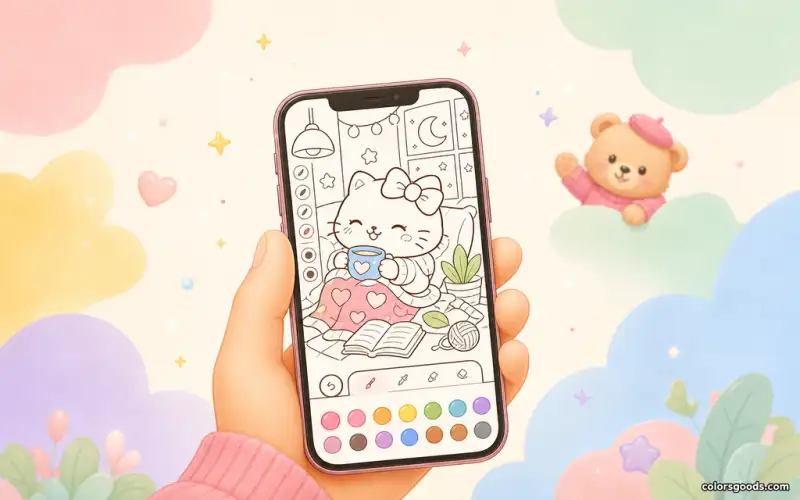
If you color on a phone or tablet, your "supplies" are the app and, optionally, a stylus. There is no cleanup, no storage and no sharpening — and the color options are effectively unlimited. Our complete guide to digital coloring explains what to look for in digital tools, and the guide to drawing on your phone covers stylus-friendly options.
Paper matters more than people expect
The paper you color on shapes the result as much as the medium. Standard printer paper works for crayons and light pencil work, but it wrinkles under markers and fights watercolor. Cardstock handles markers better and resists bleed-through. Marker paper and Bristol board are designed specifically for their mediums, and coloring books vary widely in quality.
A simple rule: match the paper to the medium you use most. If you are a pencil person, a smooth, heavier paper is worth it. If you use markers, choose a paper made for them. And if you want to test the digital route before buying anything, remember that the only "supply" you need is the device you already own — start coloring online now and see how far it takes you.
Storage and care basics
- Keep pencils sharp and organized by color; a simple case beats a jumbled drawer.
- Store markers horizontally or tip-down so the ink stays where it belongs.
- Keep crayons away from heat; they soften and smudge easily.
- For travel, a small pouch with a few pencils and a mini sharpener covers most situations.
Digital versus physical supplies
The physical-versus-digital question is really about trade-offs. Physical supplies offer a tactile experience, real-world color matching and a finished object you can frame. Digital coloring offers unlimited colors, instant undo, portability and zero cleanup.
Many colorists do both: physical at home, digital on the go. If you are curious how the two compare in practice, our coloring pages for adults guide and the best coloring apps guide give you honest frameworks for deciding.
FAQ
What supplies should a beginner start with?
A set of 24 to 48 colored pencils, good paper, and a sharpener. Add one new medium at a time — markers, then watercolor pencils — so you learn each properly instead of owning everything badly.
Are expensive supplies worth it?
For casual coloring, no. For detailed work and serious practice, quality supplies make a noticeable difference — especially pencils with soft, highly pigmented cores and paper that matches your medium. Upgrade one category at a time and feel the difference yourself.
Can I color well without any physical supplies?
Absolutely. Digital coloring requires only the device you already have, and it removes every limitation of physical supplies except the tactile feel. It is the lowest-cost way to discover whether coloring is for you.
How do I store coloring supplies for kids?
Use a sturdy box or bag with compartments, label them if it helps, and keep small pieces out of reach of toddlers. A portable caddy works well for family sessions.
What is the one thing beginners overlook?
Paper. Beginners upgrade pencils and markers but keep using printer paper, then wonder why their results look flat. Matching the paper to your medium is the single cheapest improvement you can make.
Start simple, upgrade deliberately
Coloring does not require a wall of supplies. It requires one good medium, paper that suits it, and the willingness to practice. Buy a modest set, use it until you know what you actually want, and upgrade one category at a time.
And if you want to test whether coloring is for you before spending anything, digital is the honest answer: it costs nothing, requires no storage, and works on the phone already in your pocket. For techniques that work with whatever you choose, see coloring techniques for beginners.
Try a free coloring page right now and decide with your hands, not your wallet.
Learn more about the project →
Colors Goods is researched, written, and reviewed by our small editorial team so every post stays clear, practical, and family-friendly.
Reviewed by Daniel Costa
Editorial contributor — app features and digital tools