Coloring pages for ADHD kids: how it helps + free activities
Coloring pages for ADHD kids can help children focus, settle restless energy, and practice sustained attention in a low-pressure, playful way. If your child struggles to sit still or transition between activities, a short structured coloring session can bridge high-energy play and focused tasks like homework. Coloring activates the prefrontal cortex, supporting focus in ADHD, and gives instant visual feedback that keeps motivation high without overstimulation.
For the broader science of creative calm, start with our coloring for wellness guide on how this simple activity supports attention and emotional balance at every age.
Why coloring helps kids with ADHD focus
ADHD is less a deficit of attention than a difference in regulating it. Kids with ADHD often hyperfocus on stimulating things and struggle with tasks that feel boring or overwhelming. Coloring sits in a useful middle ground: stimulating enough to hold interest, structured enough to guide attention.
- Fast feedback engages the brain. Every filled section produces a visible change — the quick reward loop an ADHD brain craves, unlike homework where payoff comes much later.
- Clear boundaries reduce overwhelm. A blank page intimidates, but a coloring page provides lines and defined areas. The child still makes creative choices without inventing the whole task.
- Busy hands channel restlessness. Holding a crayon and filling shapes gives restless hands purposeful work. Many parents notice less fidgeting when hands are busy with meaning.
- Gentle practice in sticking with things. Finishing even part of a page means staying minutes with one activity and returning after interruptions — exactly the skills these kids are building.
- Confidence without grades. There are no wrong answers in coloring. A child who struggles at school can finish a page and feel proud, easing the next focused task.
Research on structured creative activities shows they can reduce restlessness and support attention for short, focused periods, and arts-based attention studies point the same way: guided hands-on tasks help children settle better than passive screen time. The honest framing: coloring supports but does not treat ADHD. Use it alongside professional care, school accommodations, sleep, movement, and routines — not instead of them. Remember this: 10 minutes of coloring can improve attention span enough to make the next task easier, which is why parents use it as a reset before homework or in the restless late-afternoon window.
Best types of coloring pages for ADHD
Overly detailed mandalas frustrate beginners, while babyish pages bore older kids. The sweet spot is moderate structure: clear enough to guide, open enough for choice.
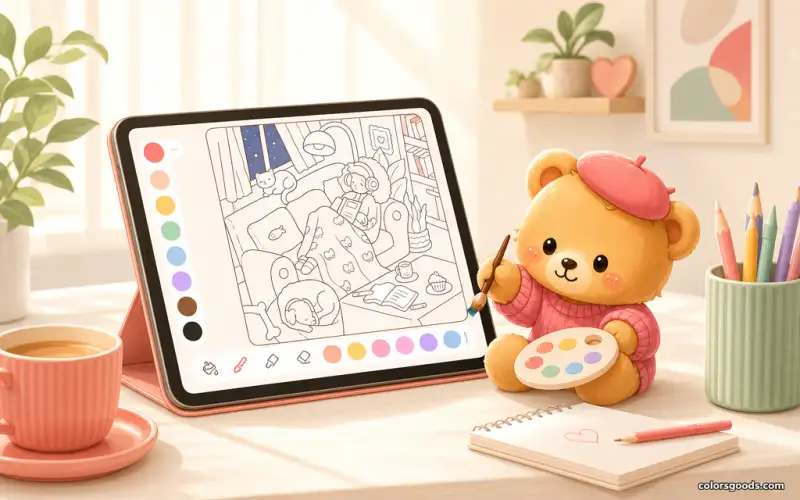
- Large-section character pages. Bold outlines, big areas, familiar subjects like animals, friendly monsters, or space scenes. Start with the largest sections first — big shapes build quick momentum and visible progress.
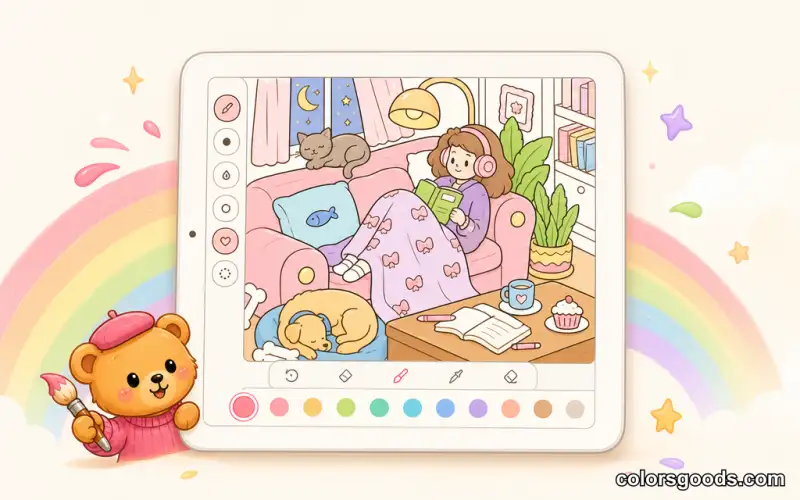
- Scenes with a small story. A cat in a kitchen or a launching rocket holds attention longer than abstract patterns because the child imagines what happens next.
- Color-by-number pages. Numbered sections say exactly what to do next, removing decision fatigue. Structured color-by-number tasks reduce restlessness because the next step is always obvious.
- Pages finishable in one sitting. Choose designs done in 10 to 15 minutes. Completing a whole page teaches follow-through and delivers the satisfaction of finishing.
- Low visual-noise layouts. Clean backgrounds and clear contrast between sections. Cluttered pages increase overwhelm and make starting harder.
Keep a rotation of five to eight favorites on a phone or tablet plus printed backups. Familiar picks cut negotiation time; add new pages weekly for novelty. Our coloring pages for kids hub has simple themes that work well as ADHD-friendly starters.
Color-by-number benefits for ADHD
Color-by-number solves three ADHD challenges at once: deciding where to start, what to do next, and knowing when you are done.
- It removes the blank-page decision. Numbers say which color goes where — pick color 3, find the 3s, fill them. One clear instruction at a time.
- It creates micro-wins. Each numbered region is a tiny task with a clear end, sustaining motivation through repeated completion moments.
- It trains visual scanning. Finding same-number sections practices systematic searching and working memory without feeling like a worksheet.
- It has a visible finish line. The picture reveals itself as colors fill in, reducing the urge to quit halfway.
Start with pages using only 5 to 10 colors and large numbered areas. A limited palette of 5 to 10 colors prevents the stall of choosing colors for eight minutes and coloring for two. See our color-by-number games guide for playful formats kids love.

Tips for parents: calm coloring sessions
You need no perfect art corner — just predictability: same place, same cues, short duration, calm ending.
- Pre-pick the page. Offer two choices, not twenty: rocket or cozy cat? This avoids a 15-minute browsing spiral.
- Limit the palette to 5 to 10 colors. Fewer options mean faster starts and less mid-session switching.
- Set a timer for 10 to 15 minutes. Short predictable sessions beat long open-ended ones; stopping at the ring is fine, finished or not.
- Start with the largest sections first. Filling the big sky or background first transforms the page fast and prevents early quitting.
- Stay nearby, not overhead. Quiet parallel presence — your own page, a book — co-regulates without pressure. Never correct color choices.
- Cut background stimulation. TV off, notifications muted, competing toys cleared. Soft instrumental music is fine.
- Close with praise plus transition. Name it: you stayed with the rocket the whole timer — great focus. Then bridge: now we tidy and start reading.
Avoid demanding finished pages, over-detailed designs, sessions past 20 minutes for beginners, or making coloring a removable reward. Keep it a neutral routine tool, not a test.
A 10-minute routine to try today
Try this after-school reset before homework or dinner:
- Minutes 0–1: child picks a pre-selected page and 5 to 8 colors; set the timer for 10 to 15 minutes.
- Minutes 1–8: color the big areas first; with color-by-number, work one or two numbers at a time.
- Minutes 8–10: add one final touch — a detail, a signature — and tidy up. Unfinished is fine; praise focus, not completion.
- After: move straight to the next calm activity while focus lasts.
Repeat daily for a week and watch settling and transitions improve. And since ColorsGoods: 198 free scenes, no signup needed, you can try themes freely — just open a design and start.
FAQ
Does coloring really help kids with ADHD focus?
It does not treat ADHD, but supports skills ADHD makes harder: sustaining attention, managing restlessness, completing steps in order. Many parents find a short session settles their child before homework. Research on structured creative activities agrees for short periods. Treat coloring as one tool alongside professional care, school support, sleep, and routines.
What are the best coloring pages for ADHD?
Pages with bold outlines, large sections, clean low-noise layouts, and engaging subjects like animals or space. Color-by-number helps most because numbers remove decision fatigue. Start with designs done in 10 to 15 minutes using 5 to 10 colors, beginning with the largest areas.
Why is color-by-number good for ADHD?
It gives step-by-step structure — match, find, fill, repeat — breaking work into winnable steps with a visible finish line as the picture appears. It also practices scanning and working memory playfully. Start large and simple, then add detail as stamina grows.
How long should a coloring session last?
For most kids, 10 to 15 minutes is ideal: long enough to practice sustained attention, short enough to end successfully. Use a visible timer, allow stopping at the ring, and praise effort. Consistency matters more than duration.
Is ColorsGoods free for ADHD coloring activities?
Yes. ColorsGoods offers 198 free scenes with no signup needed across animals, cozy scenes, and playful characters. Digital tap-to-fill removes precision frustration for younger kids; crayons add soothing tactile input. Open a design and start a 10-minute session today.
Conclusion
Coloring pages for ADHD kids meet children where they are: busy hands, curious minds, and a need for quick feedback and clear structure. With large-section pages, supportive color-by-number formats, short timed sessions, and a limited palette, a creative pause builds focus and eases transitions into learning.
Try it today: one page, a timer set to 10 to 15 minutes, biggest areas first. ColorsGoods makes it easy with 198 free scenes and no signup. Explore our coloring for wellness guide, the coloring pages for kids collection, and the color-by-number games guide.
Learn more about the project →
Colors Goods is researched, written, and reviewed by our small editorial team so every post stays clear, practical, and family-friendly.
Reviewed by Ana Ribeiro
Editorial contributor — coloring activities and creative learning