Family coloring activities: screen-free fun for kids, parents and grandparents
Family coloring is one of the few activities where a toddler, a parent and a grandparent can sit at the same table and all feel like they are participating equally. A two-year-old scribbles with chunky crayons while a grandparent works on a detailed scene — both engaged, both relaxed, both part of the same shared moment.
This guide covers age-appropriate coloring for every generation, screen-free activity ideas for rainy days, preschool learning games, and simple ways to build coloring into your family's everyday rhythm. You do not need matching skill levels or expensive supplies. The goal is connection, not competition.
Why family coloring works
It levels the playing field
Coloring accommodates different ages and abilities better than almost any other activity. There is no winner, no timing, no skill requirement. A three-year-old's scribble and a grandmother's shaded garden are equally valid at the family table. That inclusiveness is rare — and it is exactly what makes coloring work across generations.
It creates natural conversation
When hands are busy, mouths open. Coloring produces the kind of relaxed, side-by-side interaction where children share what happened at school and adults let stories from their own childhood surface. The page gives everyone something to look at when the conversation pauses, which removes the awkwardness some families feel in unstructured time together.
It is genuinely calming
The repetitive motion of filling shapes activates the parasympathetic nervous system — the body's rest-and-digest response. This works for children too, which makes coloring a practical tool for evenings before bed or after high-energy afternoons. For more on the science, see coloring for stress relief.
Age-appropriate approaches
Toddlers (2-4 years)
- Use thick crayons or chunky markers that are easy to grip
- Choose pages with very large, simple shapes
- Focus on the process, not the result — scribbling is the practice
- Keep sessions short: five to ten minutes is plenty
- Talk about colors as they choose them: "What color is the sun today?"
Young children (5-8 years)
- Introduce coloring within the lines as a gentle challenge, not a rule
- Colored pencils give more control than crayons
- Choose pages with moderate detail and recognizable subjects
- Celebrate effort over perfection — a purple elephant is a creative win
Pre-teens (9-12 years)
- Offer more detailed pages if they want them
- Let them own their color schemes completely
- Introduce blending and shading as optional techniques
- Respect their growing independence — do not hover or correct
Adults and grandparents
- Choose any complexity level that feels enjoyable
- Use coloring as a conversation starter, not a task
- Share stories while coloring together — "I used to color with my grandmother..."
- Model patience and enjoyment; your calm is contagious
Screen-free coloring ideas for rainy days
Rainy afternoons are the classic test of family creativity. Coloring is the answer — no screens, no batteries, no mess that takes hours to clean. These ideas keep the energy positive when everyone is stuck indoors.
The theme session
Pick a theme — animals, weather, seasons, space — and everyone colors pages around it. This creates a shared experience even when skill levels differ wildly. A toddler colors a big sun while a pre-teen works on a detailed ocean scene; the theme holds it all together.
Color and create a story
After coloring, each person tells a short story about their picture. This extends the activity, adds a creative-writing element, and turns the session into something the family remembers. Young children especially love explaining the worlds they just created.
The collaborative mural
Get a large sheet of paper or print a big scene. Each person colors a section, then the family combines the pieces into one artwork. This is a powerful lesson in teamwork — the final result depends on everyone doing their part.
The color-and-gift project
Have kids color pages as gifts for grandparents, neighbors or friends. This adds purpose to the activity and turns a quiet afternoon into something meaningful for someone else. A colored page tucked into a thank-you note is a gift no store can match.
Indoor color hunt
Before coloring, send kids on a house hunt for objects that match the colors they want to use. A red apple, a green leaf, a blue sock. This adds movement to a sedentary activity and builds color vocabulary along the way.
Preschool coloring that teaches
For preschool children, coloring is quietly educational — but it only works if it feels like play, not lessons.
Letters and numbers
Pages with large letters or numbers help children remember their shapes. Choose letters from the child's name for extra engagement. As they color, name the letter and its sound — the verbal layer reinforces the visual one.
Counting through coloring
Pages with numbered sections — color the three apples red, the two stars yellow — connect numbers to quantities in a way that feels like a game. Talking while coloring ("one, two, three apples!") builds number vocabulary naturally.
Shape recognition
Circles, squares, triangles and stars are the alphabet of early geometry. Coloring shapes helps children recognize forms in the world around them — the wheels on a car are circles, the windows are squares.
Let the child lead
Follow their interests. If they love animals, use animal pages. If they love space, find rocket and star pages. Interest drives engagement, and engagement drives learning. Never correct their work — a green cat is a sign of a healthy imagination.
For a deeper look at early learning through art, see the coloring pages for kids collection and the special theme coloring pages guide for affirmation, zodiac and pet-themed pages that young children love.
Setting up the family coloring space
A good setup makes the difference between a five-minute activity and an hour of shared creativity.
- Clear a large table or use the floor with a protective mat
- Have crayons, pencils and markers within reach of every age
- Put on calm background music — low volume keeps conversation easy
- Remove distractions: TV off, phones in another room
- Keep snacks nearby for younger children — coloring is hungry work
Making coloring part of everyday family life
You do not need a special occasion to color together. Families that weave coloring into their routine find it becomes one of their most reliable low-tech rituals.
- Sunday morning ritual. Spread pages across the kitchen table while breakfast is happening. No pressure, no structure — just color and talk.
- Dinner-time preview. Print a page related to what is happening that week — a holiday, a season, a school topic — and let everyone work on it in shifts.
- Travel companion. Coloring pages in a folder keep kids quietly engaged on flights, trains and restaurant waits. It is one of the most portable screen-free tools there is.
- Weekly family gallery. Pick a wall or a corner of the fridge for finished pages. Watching the collection grow gives children a visible record of their creativity.
FAQ
What age is best to start coloring with kids?
You can start as early as 18 months with large crayons and free scribbling. The key is making it fun, not educational. Structured pages with recognizable shapes work well from about age three.
How do I keep a toddler engaged?
Keep sessions short — five to ten minutes. Use bright colors and thick tools. Let them move freely; sitting still is not required. If they lose interest, stop without fuss and try again later.
Can coloring help when siblings argue?
It can reduce tension by providing a shared, low-pressure activity. When hands are busy, conflicts often cool down. It does not replace communication, but it creates a calmer environment for it.
What supplies do we need?
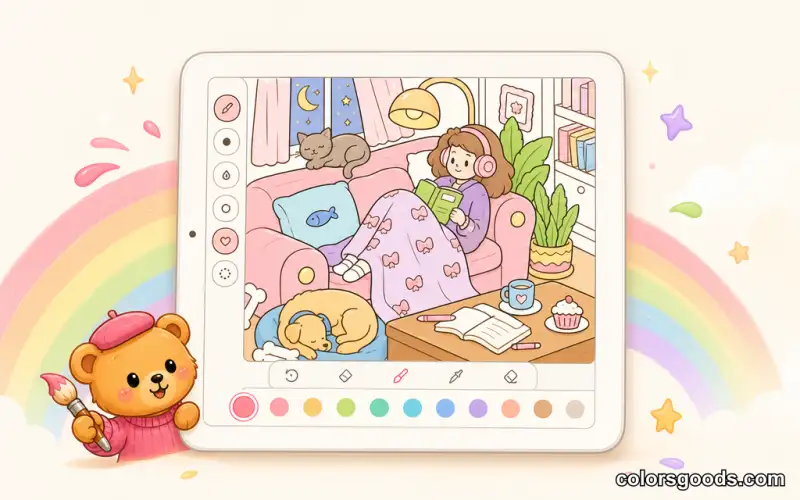
Crayons, colored pencils, markers and printed pages are enough. A phone or tablet with a coloring app works too — especially useful when traveling or when paper and crayons are not available.
How much screen time should kids have?
Pediatric guidelines suggest limiting screen time and encouraging offline activities that develop fine motor skills, creativity and emotional regulation. Coloring is one of the best offline options — it builds skills while it calms. For help picking the right pages for each age, see how to choose coloring pages.
Build your family's coloring ritual
Family coloring does not require artistic ambition, expensive supplies or elaborate planning. It requires a table, some pages, and the willingness to sit together for a while. The conversations that happen while hands are busy — those are the real reward.
Start with one ritual: a Sunday morning spread, a rainy-day theme session, or a color-and-gift project for a grandparent. Let the habit grow from there. When your children look back on family time, the afternoons spent coloring together will be among the moments they remember.
If you want seasonal pages for the whole family, our seasonal coloring guide covers holidays and celebrations all year round. And to bring the habit into your own day too, the coloring lifestyle integration guide shows how creativity can become part of everyone's routine.
Pick your first family coloring page now — spread them on the table and let the conversation begin.
Learn more about the project →
Colors Goods is researched, written, and reviewed by our small editorial team so every post stays clear, practical, and family-friendly.
Reviewed by Ana Ribeiro
Editorial contributor — coloring activities and creative learning