Calms a busy mind
The slow, repetitive motion of coloring gives your thoughts somewhere gentle to land, which helps ease mental tension.
Coloring for relaxation is a gentle way to decompress. Choose a cozy page, breathe, and let the simple act of filling color ease the tension of the day.
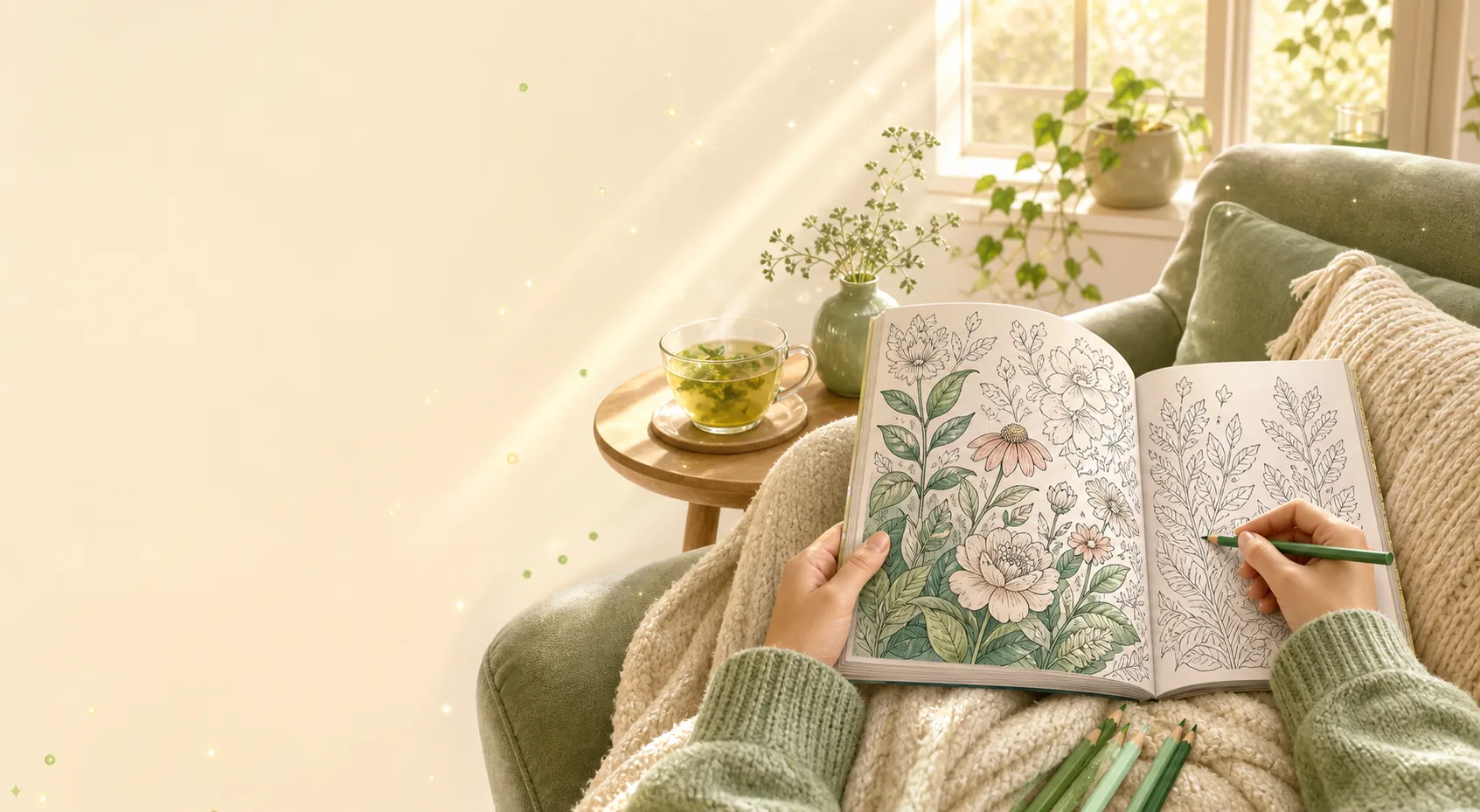
The slow, repetitive motion of coloring gives your thoughts somewhere gentle to land, which helps ease mental tension.
A softer alternative to scrolling before bed — coloring lets your eyes and mind slow down without blue-light overload.
There is no right or wrong color. Relaxation coloring is about the process, not the result, so you can let go of perfectionism.
Who it’s for
Best for adults and teens dealing with daily stress, anxiety, or burnout who want a low-effort, screen-light way to unwind at the end of the day.
Why it works
Coloring activates the brain’s relaxation response by combining gentle focus with repetitive motion. This combination lowers cognitive load and signals safety to the nervous system, which is why many people feel calmer after just a few minutes.
Practical tips
Coloring for relaxation is one of the simplest stress-relief activities you can do anywhere. By focusing on color and shape instead of worries, you give your nervous system a chance to settle — no app, no equipment, no skill required.
Studies on adult coloring have linked it to reduced anxiety and improved mood, especially when the activity is done without pressure to produce a “good” result. The benefit comes from the repetitive, low-stakes motion itself.
Unlike passive relaxation like watching TV, coloring keeps your hands gently busy, which is why it often works better for people who struggle to sit still during meditation. The page gives your attention a soft anchor without demanding anything from you.
Colors Goods curates cozy, calming pages designed for relaxation — soft scenes, gentle outlines, and themes that invite a slower pace so a short session can genuinely help you unwind.
Yes. Research on adult coloring has linked it to lower anxiety and improved mood. The combination of gentle focus and repetitive motion helps calm the nervous system.
Even five to ten minutes can help. Many people find that a 15–20 minute session in the evening is enough to noticeably ease tension.
Warm, soft tones like peach, lavender, and sage tend to feel soothing, while cool blues and greens create a calmer mood. There is no wrong choice — pick what feels restful to you.
No. Children also benefit from calming coloring time, especially before bed or after an overstimulating day. The pages on Colors Goods are suitable for most ages.

Start coloring
Coloring for relaxation is a gentle way to decompress. Choose a cozy page, breathe, and let the simple act of filling color ease the tension of the day.


