Builds fine motor skills
Holding a color and staying near the lines strengthens the hand-eye coordination kids need for writing and drawing.
Coloring for kids is more than fun — it builds fine motor skills, color recognition, and focus. These friendly pages make every session feel like play.
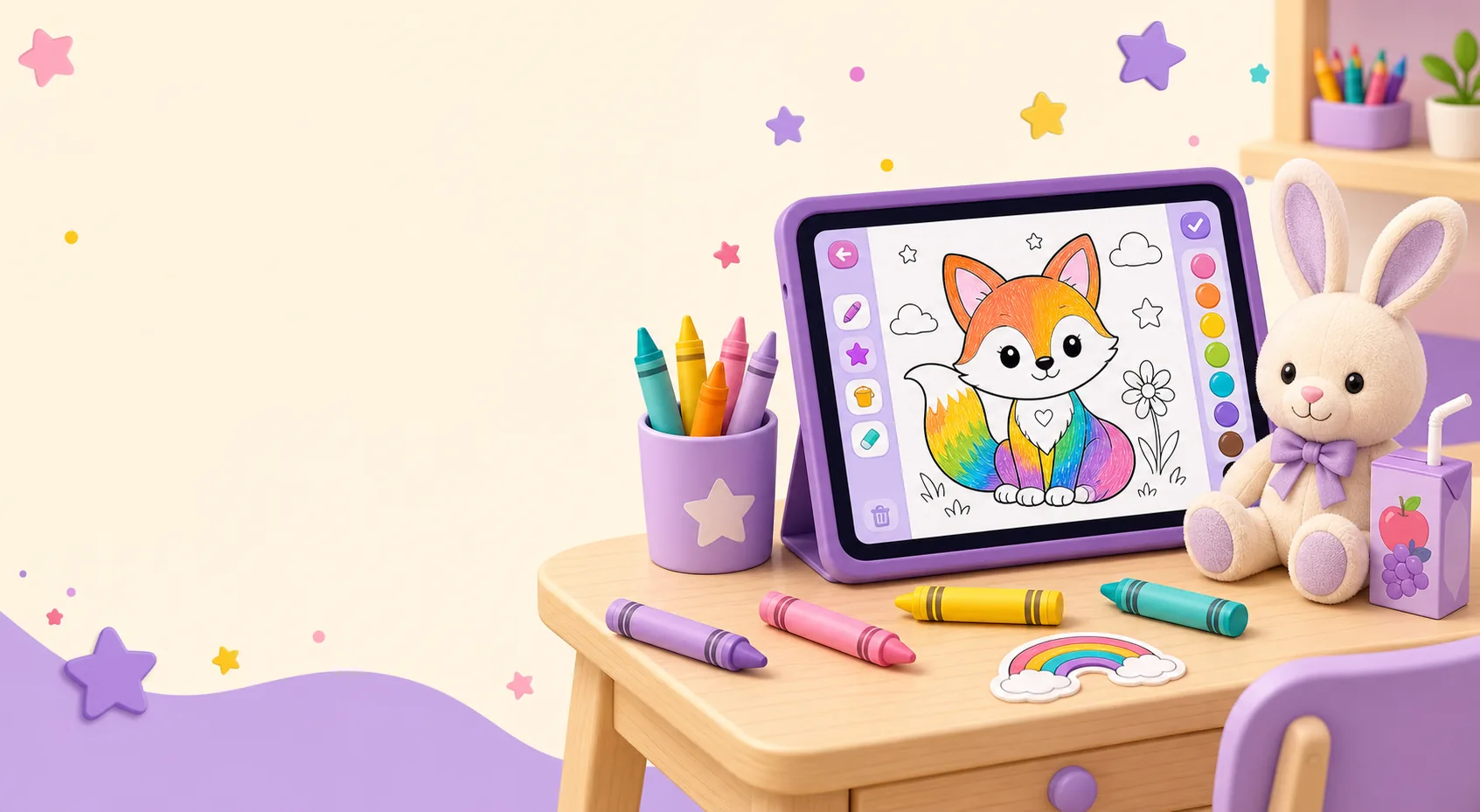
Holding a color and staying near the lines strengthens the hand-eye coordination kids need for writing and drawing.
Choosing colors and finishing a page supports color recognition, patience, and the ability to focus on one task at a time.
Friendly characters and cheerful scenes keep coloring fun, so kids stay engaged without it feeling like a lesson.
Who it’s for
Best for young children and families — at home, in the classroom, or during travel — who want a screen-light activity that quietly builds real skills.
Why it works
Coloring sits in a sweet spot between play and learning. It is structured enough to build focus and motor control, but open enough that children experience it as fun rather than work.
Practical tips
Coloring for kids is one of the most recommended quiet activities for early development. It strengthens fine motor skills, supports color recognition, and helps children practice focus — all while feeling like play rather than a lesson.
Pediatricians and educators often highlight coloring because it builds the hand strength and hand-eye coordination that later support writing. The simple act of staying near the lines is early handwriting practice in disguise.
For parents, coloring is also a flexible activity: it works at the kitchen table, in a waiting room, or on a tablet during travel. A few pages and a small set of colors can turn an overstimulating moment into a calm, focused one.
Colors Goods offers kid-friendly pages with clear outlines and cheerful scenes, designed so children can start quickly and feel successful from the first page.
Most children can start simple coloring around age two. Younger kids enjoy broad scribbles, while older children benefit from pages with clearer outlines as their motor skills develop.
Coloring strengthens fine motor skills, hand-eye coordination, color recognition, patience, and focus. These are foundational skills that later support writing and other classroom tasks.
Both have value. Paper coloring builds grip and pressure control; screen coloring is convenient for travel and introduces color tools without supplies. Many families use both.
It depends on the child, but 10–20 minutes is typical for young kids. Let them stop when they lose interest — forcing it turns play into a chore.

Start coloring
Coloring for kids is more than fun — it builds fine motor skills, color recognition, and focus. These friendly pages make every session feel like play.

